

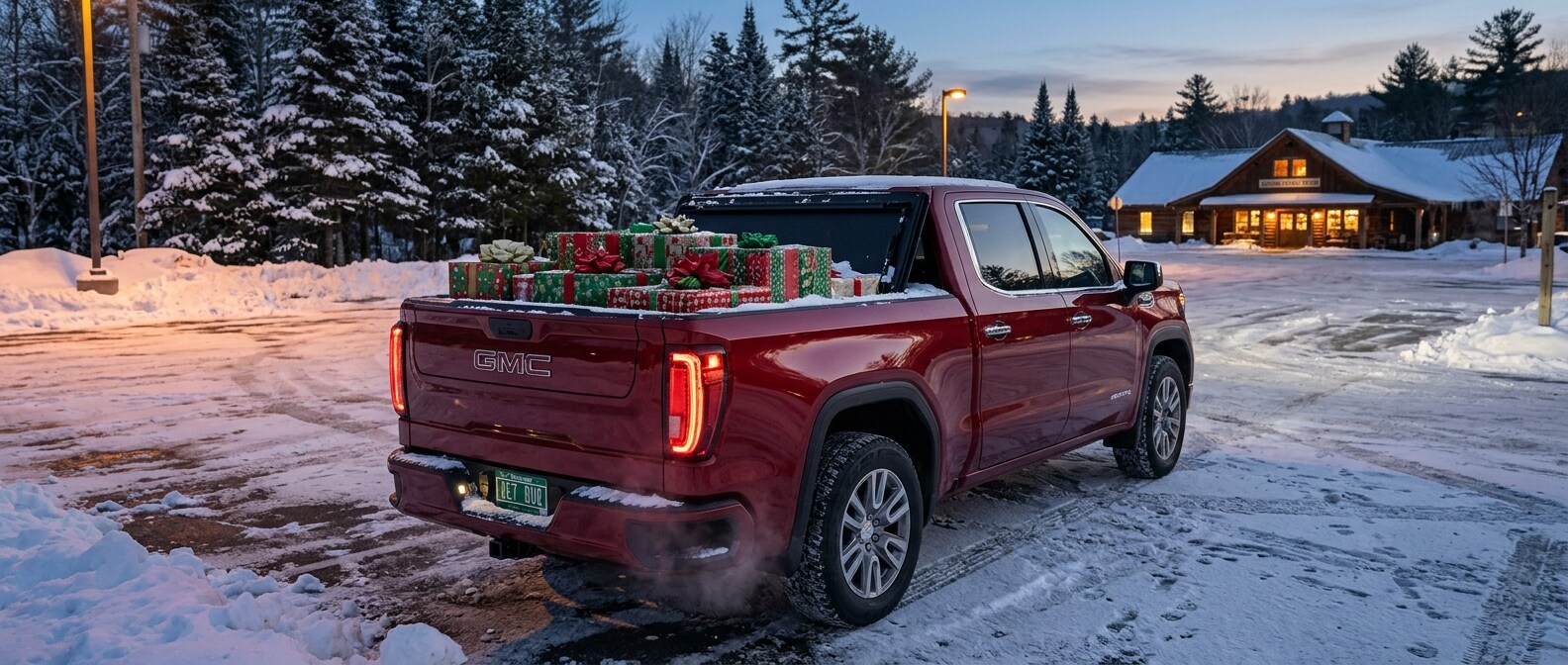
The pile at the checkout lane never stacks as neatly as you pictured. Big boxes, oddly shaped bags, something that really shouldn't get crushed, and three kids in the back seat watching all of it. A GMC is built for exactly this, which helps. We wrote this guide to get every gift from the store to the front door undamaged, organized, and hidden from anyone who isn't supposed to know what's inside.
The single most important step is loading heavy, rigid boxes against the front wall of the cargo area first, then building toward the rear with lighter and fragile items on top. Reversing that order is how gifts arrive crushed.
The GMC Acadia fits families running the bulk of this errand, though the right approach shifts by model. Yukon XL owners face a different problem than Terrain drivers, and the Sierra 1500 has its own best-practice steps built right into the tailgate. We'll cover all four here, with the specific numbers and steps each one calls for.
What You Need Before You Start
A little prep in the parking lot saves a lot of reorganizing in the driveway, so gather a few basics before the first box goes in, and don't overthink the kit because most of what you need probably already rides in your vehicle. Run through the short list below first.
| Item | Why It Matters |
|---|---|
| Moving blanket or rubber cargo mat | Protects wrapped boxes from a hard plastic or metal floor surface; also stops boxes from sliding |
| Cargo net or bungee set | Keeps bags and lighter boxes from shifting on hard stops |
| Reusable grocery totes | Group small loose items so they don't scatter under seats |
| A flat piece of cardboard | Creates a stable layer between stacked boxes |
| Small flashlight or phone light | November in Brattleboro gets dark by 4:30. Useful when loading at the end of a shopping run. |
Why do cold truck beds threaten cardboard? Condensation. In November, any metal truck bed or cargo floor holds a chill, and moisture forms on the bottom of boxes when a cold bedliner meets warm indoor packaging. A moving blanket or rubber cargo liner between the floor and your boxes handles that completely. Worth sorting before you load anything.
Loading Your GMC the Right Way
Every model below follows the same core principle even though the specific steps change by vehicle, so once you understand the logic you can adapt it to a Sierra bed or an SUV cargo bay without re-learning anything. Weight and rigidity go in first, closest to the front, and fragile, lightweight items fill the gaps last. Jump to your model, then work the numbered sequence.
Sierra 1500: Use the MultiPro Tailgate as Your Loading Platform
The Sierra 1500 comes with the MultiPro Tailgate on every trim except Pro, and it genuinely changes how you load. Use it right and you'll save your back while protecting every box.
Step 1: Drop the tailgate to its full-open position first. You get a flat, waist-height work surface this way. The inner gate folds down on its own to make a step, so you can reach toward the cab wall without crawling in.
Step 2: Use the step function to climb in and push boxes toward the front wall. Large, heavy boxes (the television, the board game set, anything in a dense retail box) go nose-first against the cab wall. The 2027 Sierra bed has 16 built-in tie-down locations, four of them new this year on the tailgate itself. Clip your cargo straps here before you move on.
Step 3: Layer medium-weight boxes behind the heavy ones. Stack only if the bottom box is rigid enough to hold weight without compressing. Wrapped gifts in soft paper won't give you a stable base for anything.
Step 4: Use the cargo net across the bed opening. Hook it at the tie-downs along the top rail, and it catches anything that tries to shift rearward under braking.
Step 5: Put fragile items last, in the center of the bed. Surrounded on three sides, they get the most protection from side-to-side movement.
Step 6: Close the inner gate before the outer tailgate. Closing order matters here. The inner panel locks the load from the rear, and if you close only the outer gate, boxes can still work their way toward the opening.
The short bed on a Sierra 1500 Crew Cab holds 62.9 cubic feet, a substantial haul for one shopping trip. With the standard bed, you're working with 71.7 cubic feet. Browse our current Sierra inventory if you're not sure which bed configuration is on your truck.
One step that's easy to skip in the cold. In cold weather, the tailgate step gets slippery fast, so wipe it down with a dry cloth before you use it. The rubber tread helps, but snow or ice off your boots changes the equation quickly. Ten seconds with a cloth before you climb. Worth it.
Acadia: Work With Your Row Configuration Before You Shop
The 2027 Acadia offers 23.0 cubic feet behind the third row with all seats up. Enough for a solid grocery run, but not a full holiday haul with passengers aboard. What matters more on a gift run is what happens when you fold.
Step 1: Decide how many people are coming home with you. If it's just adults, fold the third row flat before you leave the house. Folding opens up 57.3 cubic feet behind the second row, much more manageable for a full shopping day.
Step 2: Load heaviest bags and boxes to the rear cargo wall. In an SUV, that means against the back of the third-row seatback, folded or upright. That wall is your anchor point.
Step 3: Use grocery totes to group soft items. Wrapping paper, tissue paper, stockings. Loose on the floor, they get crushed under heavier boxes.
Step 4: Run a cargo net across the load before you close the liftgate. The Acadia's flat cargo floor packs beautifully, but nothing stops lateral movement without a net.
Step 5: If the third row is up, don't stack boxes over the seatback height. Anything above the seatback line is visible to everyone in the cabin. If concealing gifts matters, keep the load below seat height or drape a moving blanket across the top of the pile.
Yukon XL: Big Room. Still Needs a Cargo Net.
The Yukon XL gives you 41.5 cubic feet behind the third row, which is 16 cubic feet more than the standard Yukon in the same row configuration. Fold all the rows and you reach 144.5 cubic feet.
The room is generous and easy to overfill. A long cargo bay still needs the load secured.
Step 1: Lower the third row fully. Do this even if passengers are coming, so you can see the full floor and plan placement before anything goes in.
Step 2: Lay your cargo liner or moving blankets across the full floor area. The extended cargo zone lets boxes slide around unchecked. A liner stops that cold.
Step 3: Heavy items go to the front wall and the floor. Never stack a heavy item on a lighter one in a full-size SUV. Any unexpected stop will find the unstable stack.
Step 4: Use the second-row seat pockets and door pockets for small items. Stocking stuffers, bags of candy, small wrapped gifts. The pockets run deep and keep small items from sliding under the seats or getting lost in the cargo bay.
Step 5: Run a full-width cargo net or use the factory tie-down hooks at floor level. Clip it. You're driving a vehicle with a long cargo bay, and items at the front wall can shift a long way rearward with no restraint in place.
Step 6: Raise the third row before passengers get in. Takes about 15 seconds, give or take. Easier than explaining why the gifts are visible.
Terrain: Two Rows, Focused Strategy
The Terrain is a two-row SUV, so your cargo space is whatever sits behind the second row, expanded by folding those seats when nobody's riding back there. You're working with roughly 30 cubic feet with the second row up and roughly 63 cubic feet with it folded. A relatively flat load floor is the Terrain's strength here, making it easy to slide boxes in evenly.
Step 1: If you're loading alone, fold the second row. Even for a medium haul, the flat extended floor packs far more efficiently than stacking into a shorter cargo area.
Step 2: Load lengthwise from the front wall. Long, flat boxes go in first, parallel to the vehicle's centerline. They set the floor layer.
Step 3: Fill gaps with soft bags. Oddly shaped loads leave dead space at the sides. Soft bags and totes fill those corners and keep rigid boxes from tipping.
Step 4: Close and latch the liftgate carefully. The Terrain's liftgate closes lower than you'd expect if you're used to a full-size SUV. Check that nothing pokes past the liftgate seal before you close it.
The Terrain is a capable compact SUV, though it isn't the right tool for a family of five plus a full holiday run. If you're hitting that limit regularly, our team is a good first conversation.
On Route 9 heading west out of Brattleboro in November, road surfaces shift between dry and patchy ice as elevation increases toward Marlboro. Any unsecured load shifts under sudden braking. A cargo net that takes 30 seconds to clip is worth every one of those seconds.
Quick-Reference Loading Recap
Before you close up and head home, run this quick table against what you've actually loaded, because the right move changes by model and it's easy to forget a step once the driveway is cold and the kids are impatient. Use it as a final check, not a substitute for the sequences above.
| Step | Sierra 1500 | Acadia | Yukon XL | Terrain |
|---|---|---|---|---|
| Cargo liner on floor | Yes, before anything | Yes | Yes, full width | Yes |
| Heaviest items first | Against cab wall | Against rear seatback | Against front wall | Flat, against rear seatback |
| Secure with straps/net | 16 tie-down points | Rear cargo hooks | Floor tie-downs | Rear cargo hooks |
| Fragile items | Center of bed, surrounded | On top, below seatback line | On top, forward section | On top, toward cab |
| Gate or liftgate check | Inner gate first, then outer | Check for protrusion | Third row fully down first | Check liftgate seal |
A tire pressure check and a quick suspension look-over before haul season pay off on a cold Route 9 run with a full load. Book it now and we'll get you in ahead of the busiest shopping weeks.
Frequently Asked Questions About Loading Holiday Gifts in a GMC
Will a moving blanket actually prevent condensation damage to gift boxes in a truck bed?
A moving blanket or rubber cargo mat puts a barrier between the cold metal floor and the warmer cardboard box, which is where condensation forms. It won't erase the effect in deep cold, but it cuts it down a lot, and it keeps boxes from sliding on a bare bedliner too. If it's well below freezing, move your most fragile gifts to the cab or interior cargo area instead of leaving them in an open bed.
How do I keep gifts hidden from kids in a Yukon XL or Acadia?
Load gifts before passengers board and keep the load below the seatback line, that's the simplest approach. A moving blanket draped over the top does double duty, cushioning the load and hiding it. With the Acadia's third row up, loading against the rear wall keeps gifts behind the third-row headrests, out of a second-row child's natural sightline.
Which GMC model works best for a full holiday shopping day with passengers?
The Yukon XL offers the most flexibility, with 41.5 cubic feet behind the third row and 144.5 cubic feet when the rows are folded. Fold the Acadia's third row and you've got a solid small-family option (57.3 cubic feet). The Sierra 1500 gives you 62.9 to 71.7 cubic feet depending on bed size, though it carries fewer passengers. For couples or solo trips, the Terrain works well with the second row folded.